
August 19, 2026 /
In vivo CAR-T is reshaping cell therapy — but how do you evaluate vector targeting, CAR-T kinetics, antitumor efficacy, and CRS safety within a single humanized mouse model?
PharmaLegacy, as one of China’s earliest preclinical CROs, combines leading humanized mouse models with deep in vivo CAR-T expertise to offer a one-stop service — from proof-of-concept to IND. The following sections detail our approach.
1. How Is In Vivo CAR-T Disrupting Traditional Therapies?
Advances in vector technology and gene editing are rapidly moving in vivo CAR-T from concept to clinic. By reprogramming T cells directly inside the body, this approach bypasses the complexity of ex vivo manufacturing — offering a path to one injection, one cure with lower costs, faster turnaround, and greater accessibility¹ (Fig. 1).
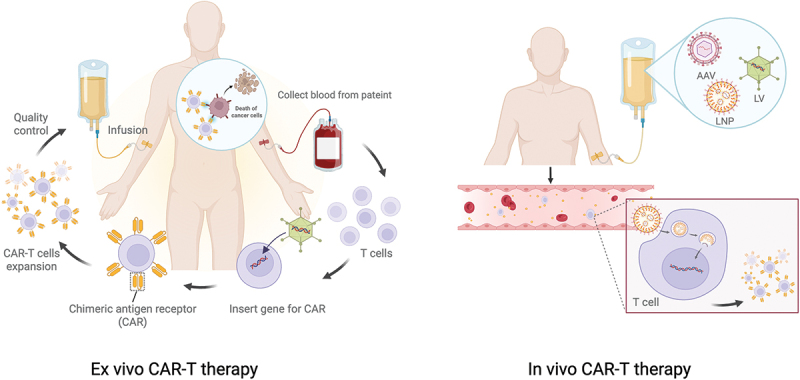
Figure 1. Ex vivo vs. In vivo CAR-T cell therapy
2. Technical Pathways: Which Technologies Can Precisely Retune T Cells In Vivo?
Today, in vivo CAR-T development follows two major technical routes (Fig.2):
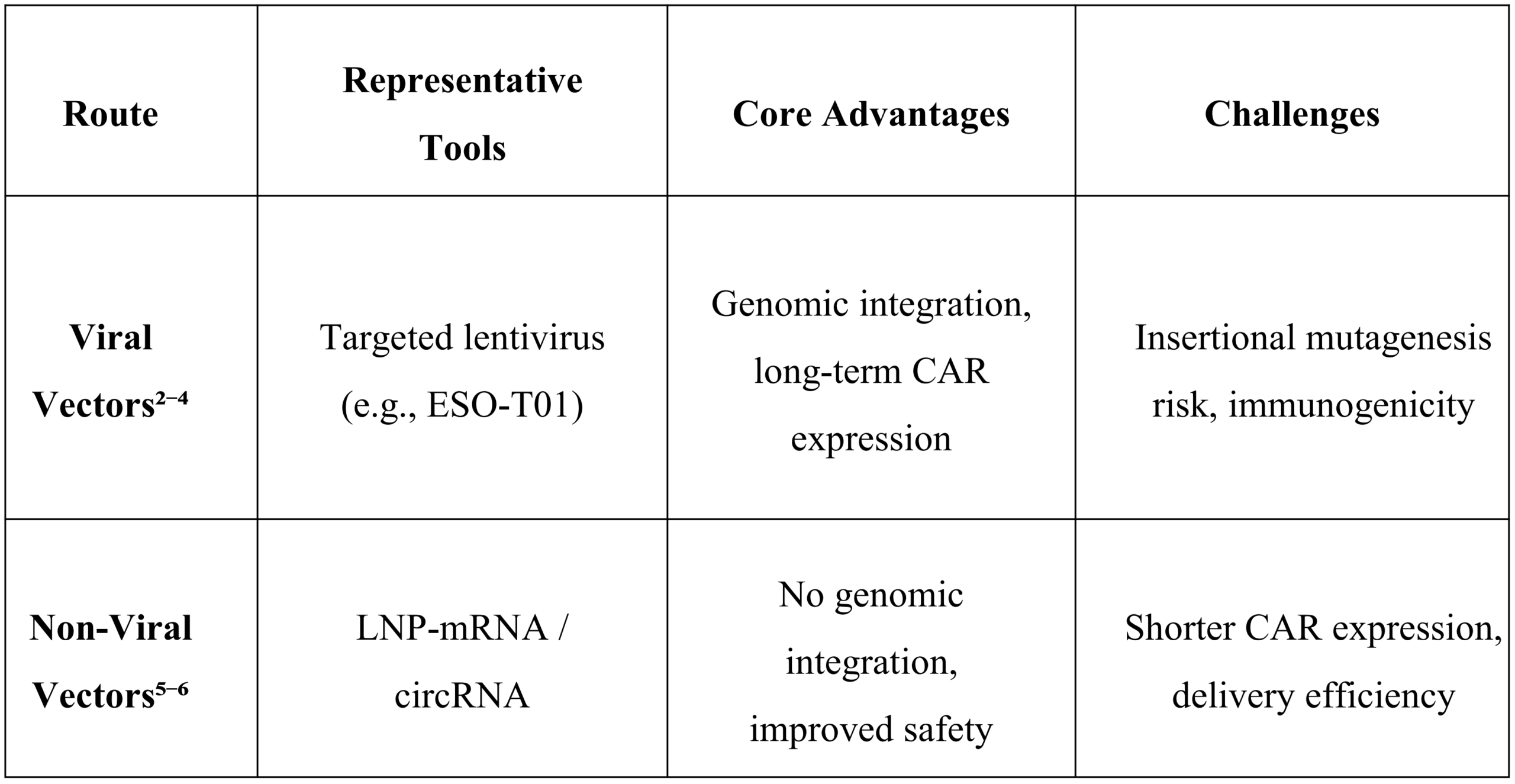

Figure 2. Vector platforms for in vivo CAR delivery: viral and non-viral vectors
3. PharmaLegacy‘s One-Stop In Vivo CAR-T Efficacy Platform
3.1 Humanized Mouse Models
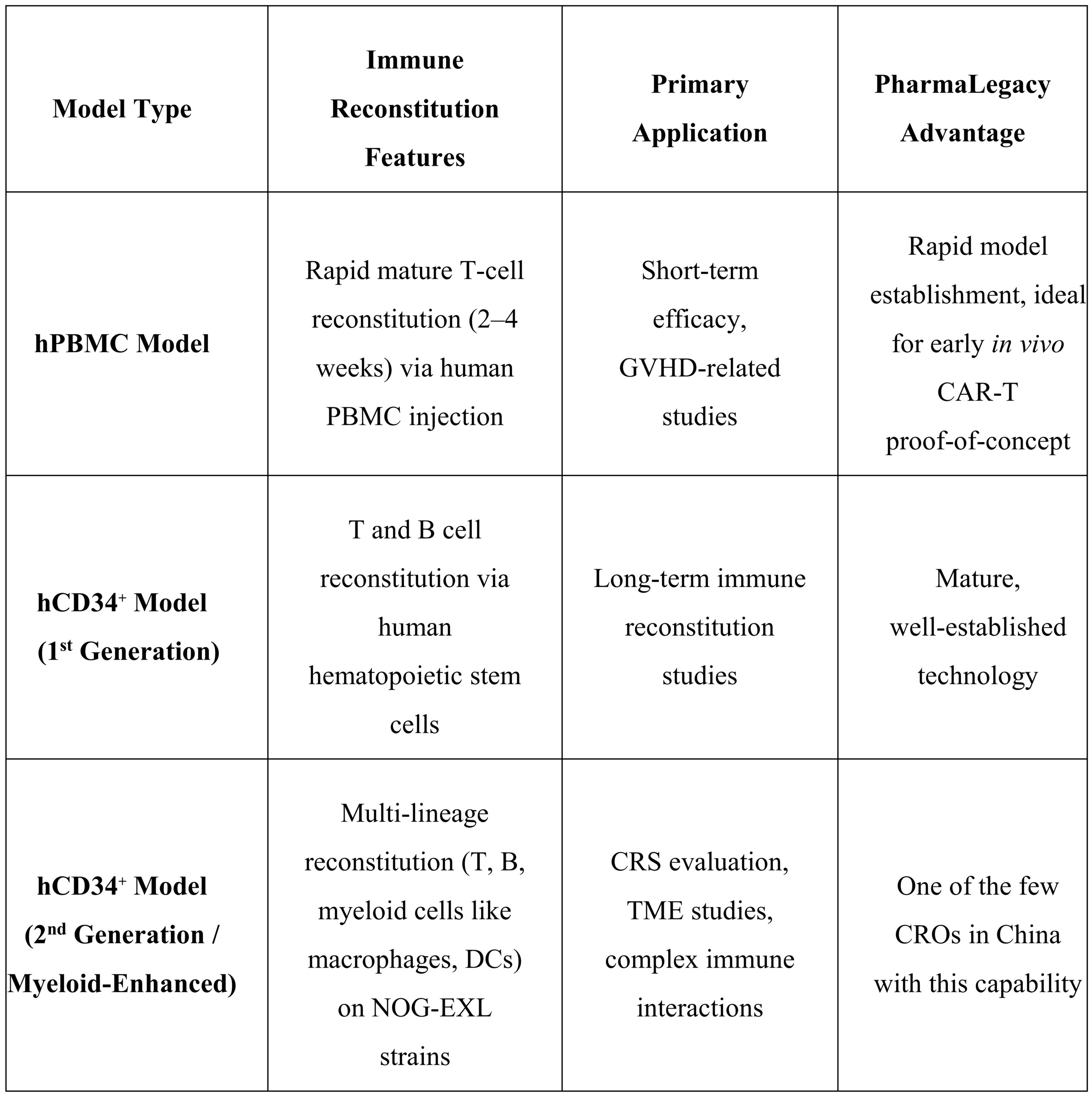
For in vivo CAR-T evaluation, immuno-humanized mouse models represent the current gold standard. PharmaLegacy was an early adopter of these models in China’s preclinical CRO field and continues to distinguish itself as one of the few CROs offering second-generation (myeloid-enhanced) hCD34⁺ humanized mice.
3.2 Case Study: In Vivo CAR-T Efficacy in a Hep3B Human Liver Cancer Model
3.2.1 Study Design (Timeline Below)

Grouping:
- G1:Vehicle Control (i.v. once)
- G2:Low Dose LVV (i.v. once)
- G3:Medium Dose LVV (i.v. once)
- G4:High Dose LVV (i.v. once)
3.2.2 Key Results (Selected)
3.2.2.1 In Vivo Antitumor Activity
The CAR-T therapy demonstrated clear dose-dependent antitumor efficacy. The high-dose group (G4) achieved complete tumor regression, while low and medium doses significantly suppressed tumor progression (Fig. 3b). Mild body weight fluctuations occurred in treated groups (G2–G4), with no severe weight loss — indicating good tolerability (Fig. 3a).
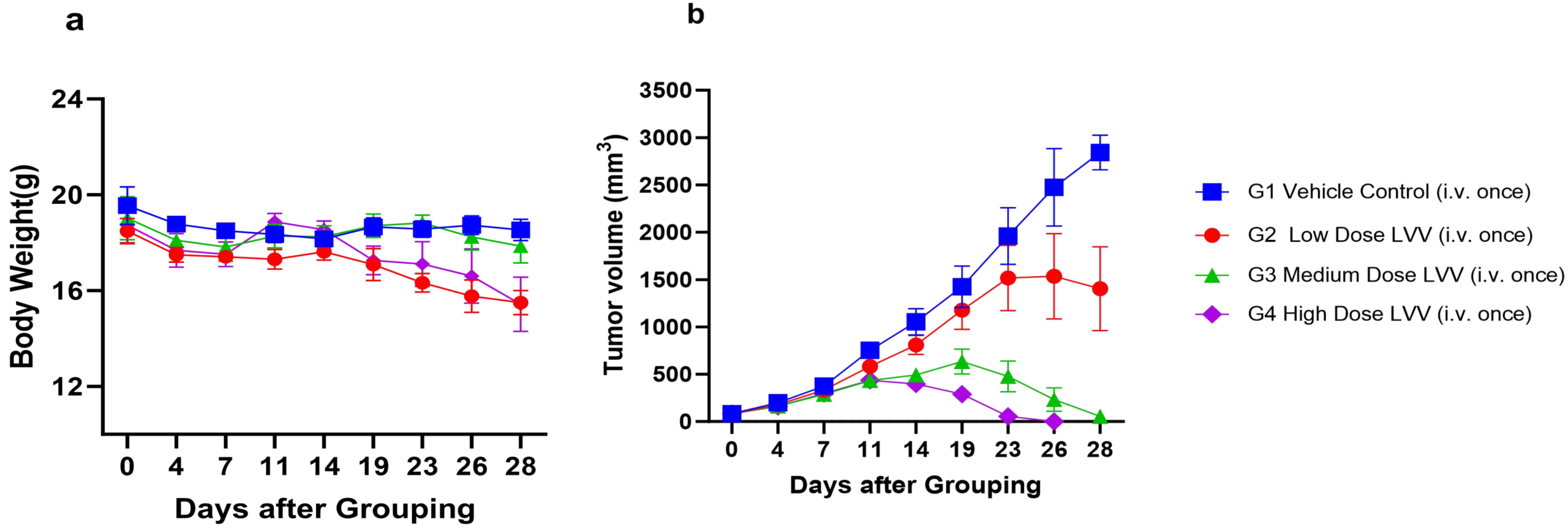
Figure 3. Safety and efficacy of CAR-T therapy in the Hep3B xenograft model.
(a) Mean body weight over 28 days. (b) Tumor volume growth curves. Data as mean ± SEM (n=5).
3.2.2.2 In Vivo CAR-T Expansion Kinetics
CAR-T expansion and persistence were dose-dependent. hCD45⁺ cells in blood reached about 90% by day 21 at high dose (G4) (Fig. 4a). CAR⁺ cells among hCD45⁺ peaked at about 70% on day 14 and held about 60% through day 28, indicating robust expansion and persistence (Fig. 4b).
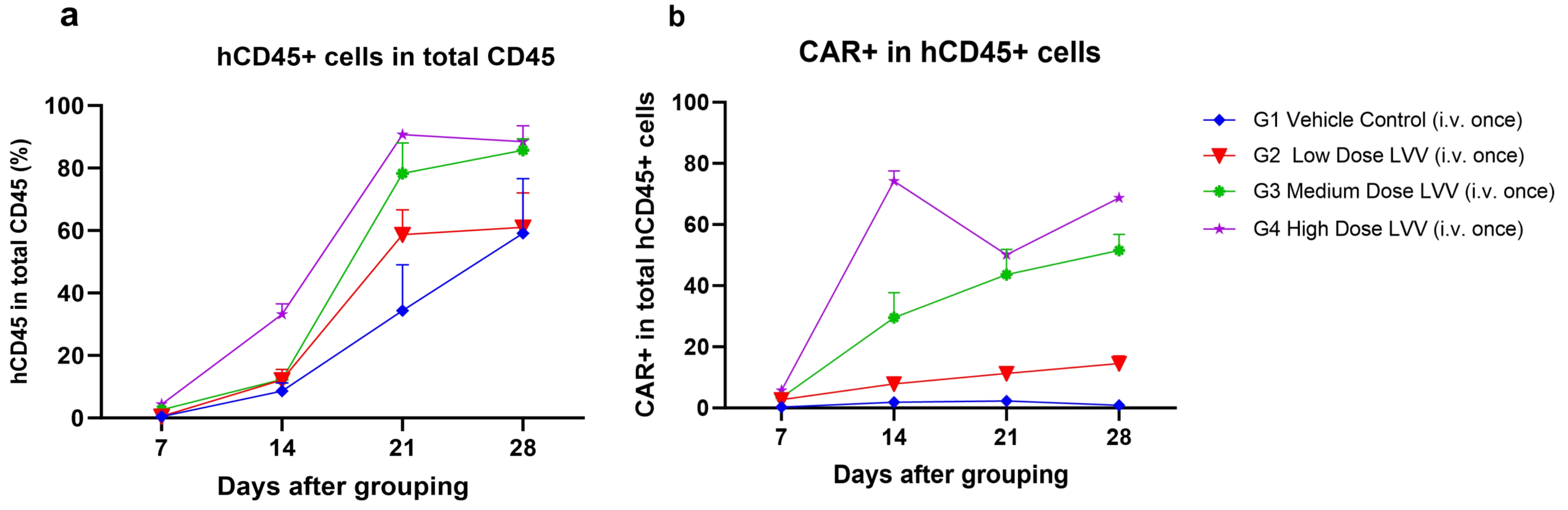
Figure 4. In vivo CAR-T expansion kinetics and dose dependency.
(a) Percentage of hCD45⁺ cells among total CD45⁺ cells. (b) Percentage of CAR⁺ cells among hCD45⁺ cells. Data as mean ± SEM (n=5).
This in vivo study validated the efficacy and safety of the CAR-T candidate, providing solid preclinical data to support downstream formulation optimization and regulatory submissions.
Beyond solid tumors, we have also established well-validated models for hematological malignancies.
4. Hematological Tumor Models: Covering Key Targets CD19 and BCMA
PharmaLegacy has extensive experience in hematological tumor models for in vivo CAR-T evaluation. We offer well-established PBMC-humanized models for key targets including CD19 and BCMA, utilizing cell lines such as NALM6 (CD19⁺ B-ALL) and MM1S (BCMA⁺ multiple myeloma).
These models enable robust evaluation of CAR-T candidates targeting hematologic malignancies.
4.1 NALM6-luc in hPBMC-Humanized Mice (CD19⁺ B-ALL)
As shown in Figure 5, the NALM6-luc xenograft model in hPBMC-humanized mice exhibits robust tumor engraftment and immune reconstitution, providing a reliable platform for evaluating CD19-targeted in vivo CAR-T efficacy. Tumor progression was monitored via bioluminescence imaging, while hCD45⁺ cell reconstitution and T-cell subset phenotyping (hCD3⁺, hCD4⁺, hCD8⁺) were assessed by flow cytometry over 21 days.
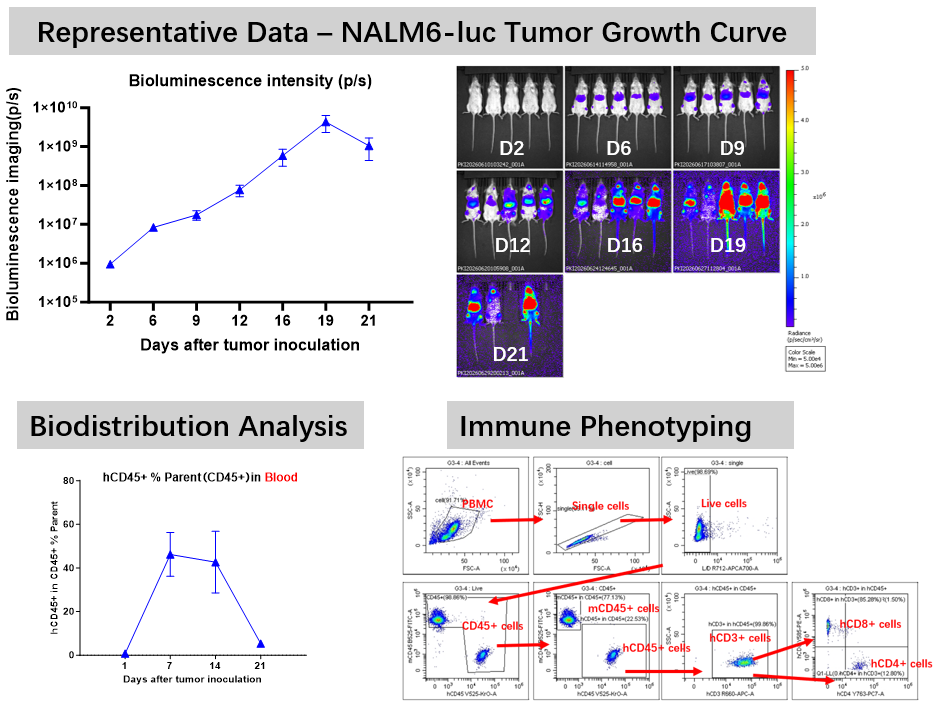
Figure 5. NALM6-luc tumor engraftment and immune reconstitution in hPBMC-humanized mice.
4.2 MM1S-luc in hPBMC-Humanized Mice (BCMA⁺ multiple myeloma)
Similarly, the MM1S-luc model enables robust evaluation of BCMA-targeted CAR-T candidates, with tumor burden and immune reconstitution tracked via BLI and flow cytometry over 22 days (Fig. 6).
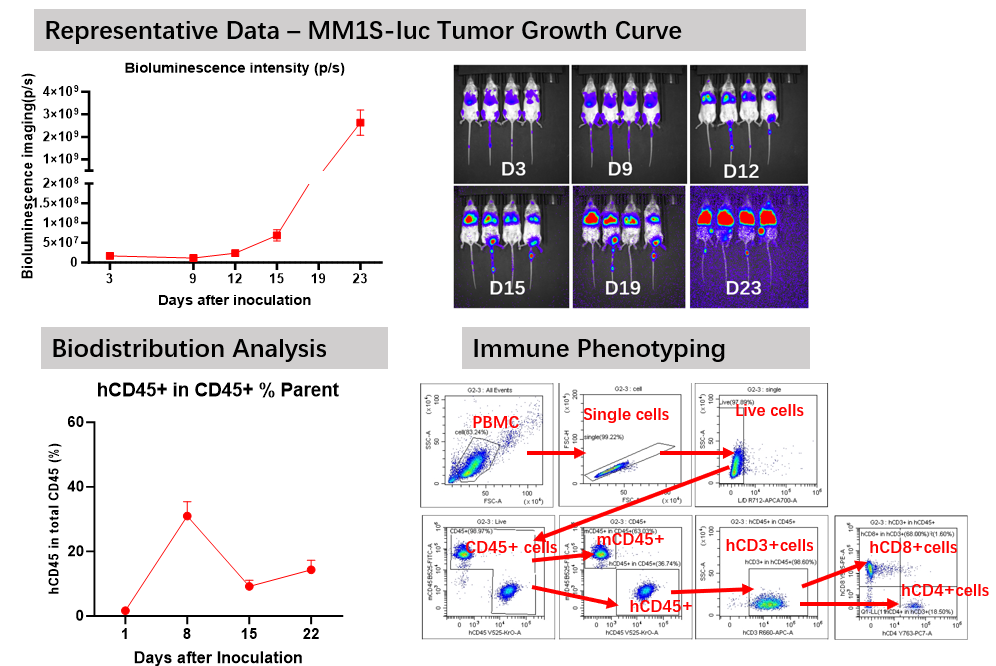
Figure 6. MM1S-luc tumor engraftment and immune reconstitution in hPBMC-humanized mice.
5. PharmaLegacy’s In Vivo CAR-T Efficacy Evaluation Platform
In vivo CAR-T evaluation requires multifaceted bioanalysis across multiple platforms.
PharmaLegacy delivers integrated solutions, spanning from molecular to cellular and local to systemic analyses.

References and Additional Resources
- Huang Y, Cao R, Wang S, et al.In vivo CAR-T cell therapy: New breakthroughs for cell-based tumor immunotherapy. Hum Vaccin Immunother. 2025;21(1):2558403.
- Nicolai CJ, Parker MH, Qin J, et al. In vivoCAR T-cell generation in nonhuman primates using lentiviral vectors displaying a multidomain fusion ligand. Blood. 2024;144(9):977-987.
- An N, Wang D, Zhang P, et al. In vivogeneration of anti-BCMA CAR-T cells in relapsed or refractory multiple myeloma: a phase 1 study. Nat Med. 2026;32(4):1257-1266.
- Nicolai CJ, Parker MH, Qin J, et al. In vivo CAR T-cell generation in nonhuman primates using lentiviral vectors displaying a multidomain fusion ligand. Blood.2024;144(9):977-987.
- Hunter TL, Bao Y, Zhang Y, et al. In vivoCAR T cell generation to treat cancer and autoimmune disease. Science. 2025;388(6753):1311-1317.
- Rurik JG, Tombácz I, Yadegari A, et al. CAR T cells produced in vivo to treat cardiac injury. Science.2022;375(6576):91-96.