
PRECLINICAL DEPRESSION STUDIES
PHARMALEGACY HAS THE EXPERTISE AND MODELS YOU NEED TO ADVANCE YOUR DEPRESSION PROGRAM.
MODELS / SERVICES
Case Study - Chronic social defeat stress (CSDS) model of depression in mouse & Endpoint Measurements
The Chronic Social Defeat Stress (CSDS) model is one of the most widely used and clinically relevant models for investigating depression-, stress-, and resilience-related neuropsychiatric disorders. Repeated exposure to social defeat induces robust behavioral abnormalities, including social avoidance, reduced stress resilience, anhedonia, and emotional dysfunction, closely resembling key features observed in patients with major depressive disorder and stress-related disorders.
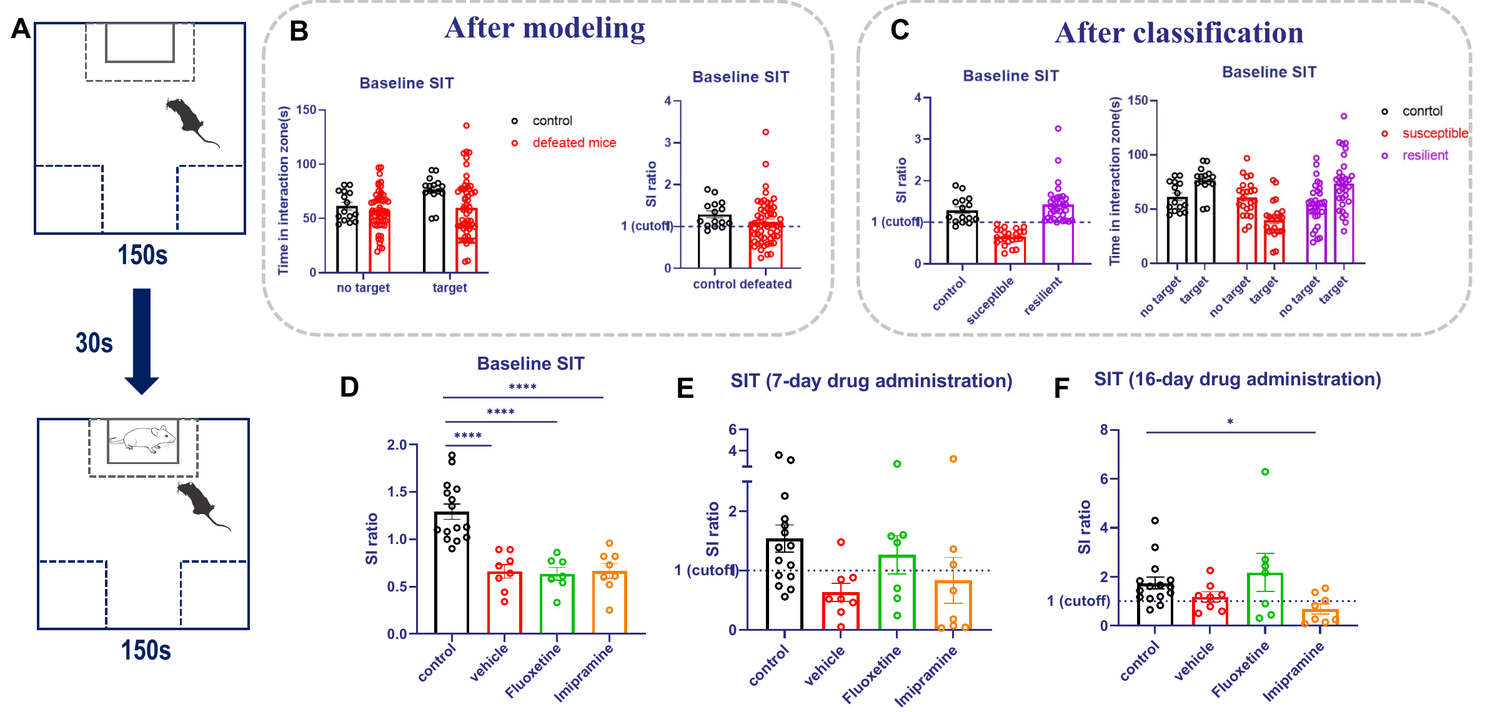
PharmaLegacy has established a robust and reproducible CSDS platform with standardized social interaction testing (SIT) for behavioral phenotyping. The model enables quantitative assessment of social avoidance behaviors and supports classification of animals into susceptible and resilient populations, providing a powerful tool for investigating individual differences in stress responses and treatment outcomes.
The translational validity of the model has been confirmed using clinically established antidepressants, including fluoxetine and imipramine, which significantly improve social interaction behavior and reverse stress-induced behavioral deficits. These findings demonstrate the predictive value of the model for evaluating novel antidepressant and stress-modulating therapeutics.
In addition to behavioral assessments, the CSDS model can be integrated with histopathology, immunohistochemistry, molecular biomarker analysis, transcriptomic profiling, and circuit-level investigations to explore mechanisms underlying stress susceptibility, resilience, and antidepressant responses. This platform is broadly applicable for preclinical development programs focused on depression, stress-related disorders, neuropsychiatric diseases, and novel CNS therapeutics.
Social Interaction Test
Case Study - Chronic unpredictable mild stress (CUMS) model of depression in mouse & Endpoint Measurements
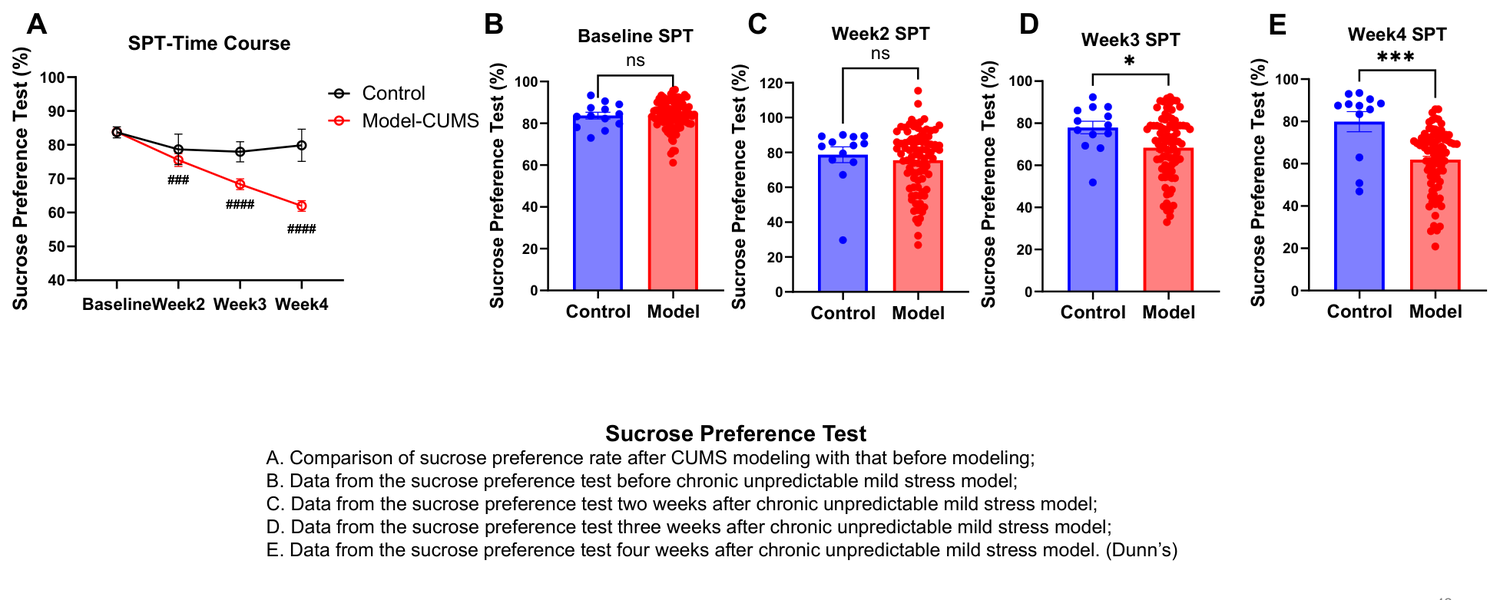
The Chronic Unpredictable Mild Stress (CUMS) model is one of the most extensively characterized and clinically relevant rodent models for depression research. Repeated exposure to a series of mild and unpredictable stressors induces progressive behavioral abnormalities that resemble key symptoms observed in patients with major depressive disorder, including anhedonia, reduced motivation, and emotional dysfunction.
PharmaLegacy has established a robust and reproducible CUMS platform with standardized stress paradigms and longitudinal behavioral monitoring. Depression-like phenotypes are routinely assessed using the Sucrose Preference Test (SPT), enabling quantitative evaluation of anhedonia and disease progression throughout the study period. The model consistently produces stable behavioral deficits and provides a reliable platform for efficacy assessment.
The CUMS model serves as a valuable tool for investigating the neurobiological mechanisms underlying chronic stress and depression. It supports evaluation of small molecules, biologics, antibodies, oligonucleotide therapeutics, and other emerging CNS treatment modalities.
In addition to behavioral assessments, the platform can be integrated with histopathology, immunohistochemistry, molecular biomarker analysis, transcriptomics, and neural circuit studies to investigate disease mechanisms, target engagement, and therapeutic responses. This model is widely applicable for preclinical development programs focused on depression, stress-related disorders, and novel neuropsychiatric therapeutics.
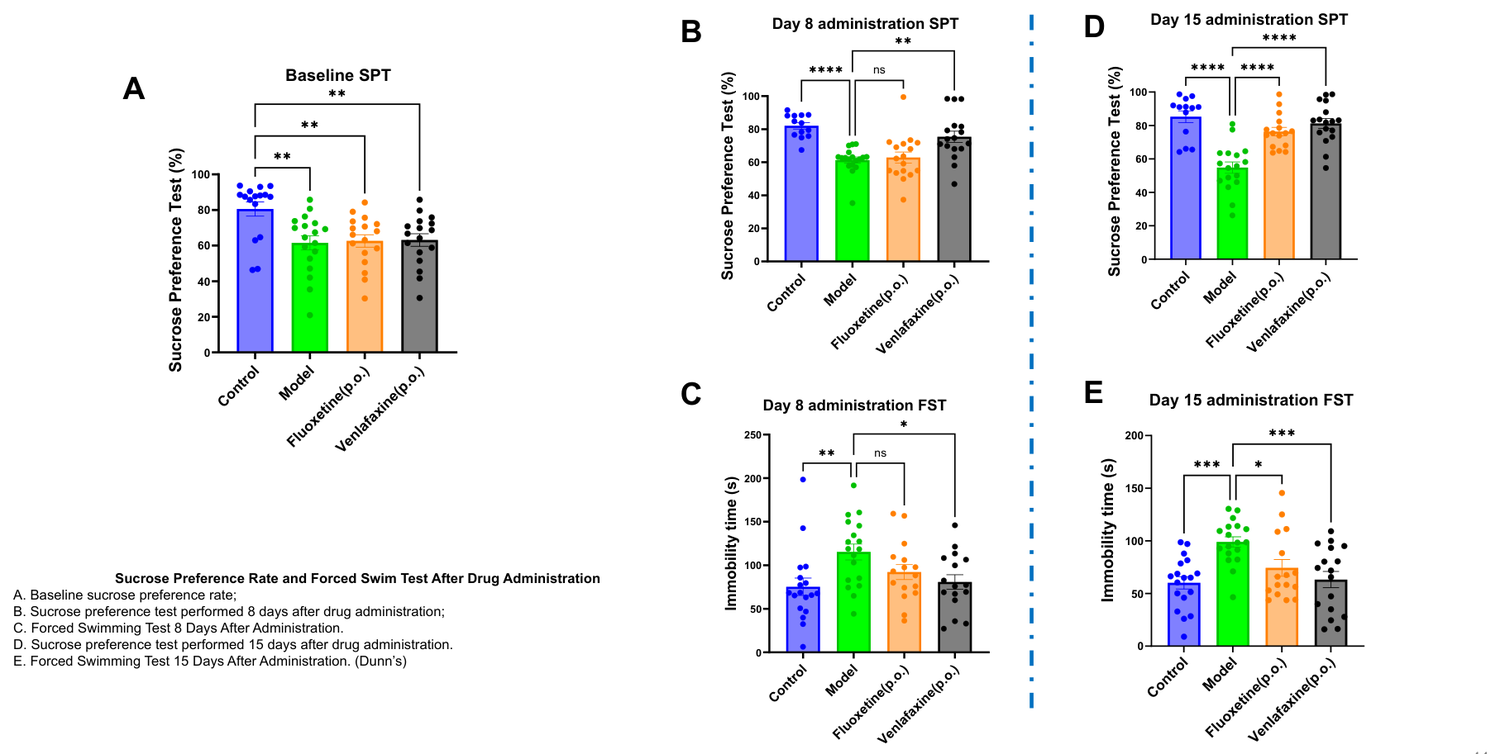
The predictive validity of the PharmaLegacy CUMS platform has been demonstrated using clinically established antidepressants, including fluoxetine and venlafaxine. Chronic treatment significantly improves sucrose preference and reverses stress-induced behavioral deficits, supporting the translational relevance of the model for antidepressant drug discovery.
To provide a comprehensive assessment of therapeutic efficacy, multiple behavioral endpoints can be incorporated, including the Sucrose Preference Test (SPT) for evaluation of anhedonia and the Forced Swim Test (FST) for assessment of behavioral despair. These complementary measures enable robust characterization of antidepressant responses and treatment outcomes.
The model exhibits robust responsiveness to clinically established antidepressants and provides a reliable platform for assessing therapeutic efficacy across different treatment modalities. It is particularly useful for evaluating compounds targeting anhedonia, stress-related behavioral deficits, and mood-related dysfunctions associated with chronic stress exposure. Combined with molecular, cellular, and systems-level analyses, the CUMS platform provides a comprehensive framework for investigating antidepressant efficacy and the biological mechanisms underlying stress-induced mood disorders.
Sucrose Preference Test
Antidepressant Efficacy (Sucrose Preference & Forced Swim Test)
Be confident in your preclinical data:
- 600+ INDs based on PharmaLegacy data
- FDA Part 11 compliant
- Rigorous adherence to international GLP and QA best practices
- AAALAC accredited
- Our scientific staff average 15+ years of experience
Advance your lead depression candidates to NDA with confidence. Contact PharmaLegacy today.
We’re ready when you are.
Tell us your Depression pipeline challenges.


