
August 12, 2026 /
Advances in organ repair, tissue repair and tissue engineering have revolutionized the way experimental orthopedics is looked at. The ability to manufacture cocktails of stem cells, biologics, and small molecules joined through biocompatible scaffolds is now being regularly used to restore both structure and function of damaged ligaments, tendons, teeth, bone, cartilage, facet joints and intervertebral discs. The relevance of developing bone and orthopedics compounds stems from their usability in both trauma (patients recovering from MVAs, etc.) and medical (spinal osteoarthritis, osteoporosis, etc.) patients.
Creating novel bone and orthopedics models needs no justification in a world where new pathologies are constantly appearing and even evolving, especially when a large number of cancers metastasize to the bones. Be it melanomas, breast cancer, or colon cancer, once a tumor finds its way to a patient’s bones, survival rates drop dramatically. More than 100,000 cases of bone metastasis are diagnosed every year, which further calls for the hasty development of new treatment methods.
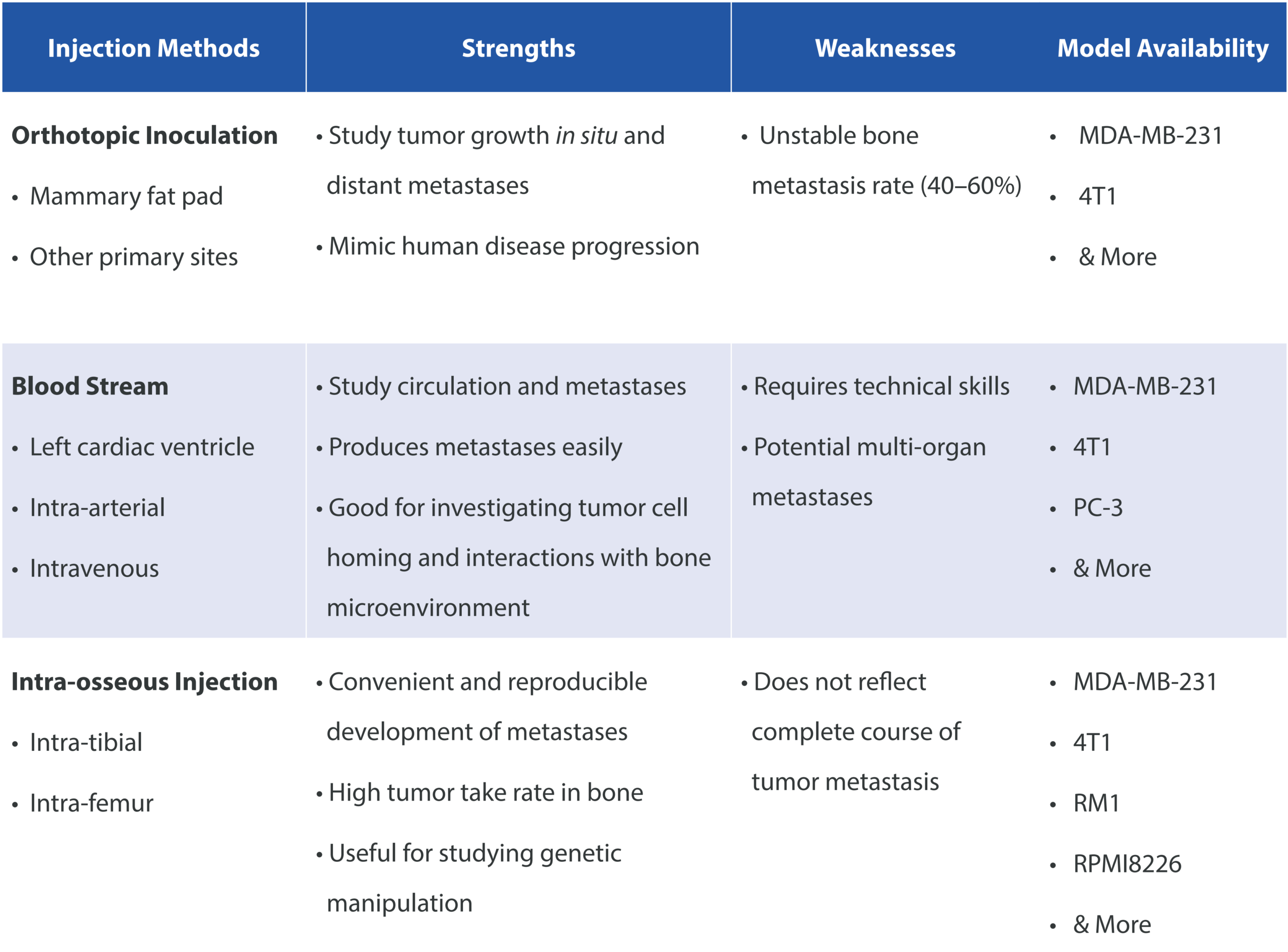
In this article, we’ll introduce you to our established bone metastasis models.
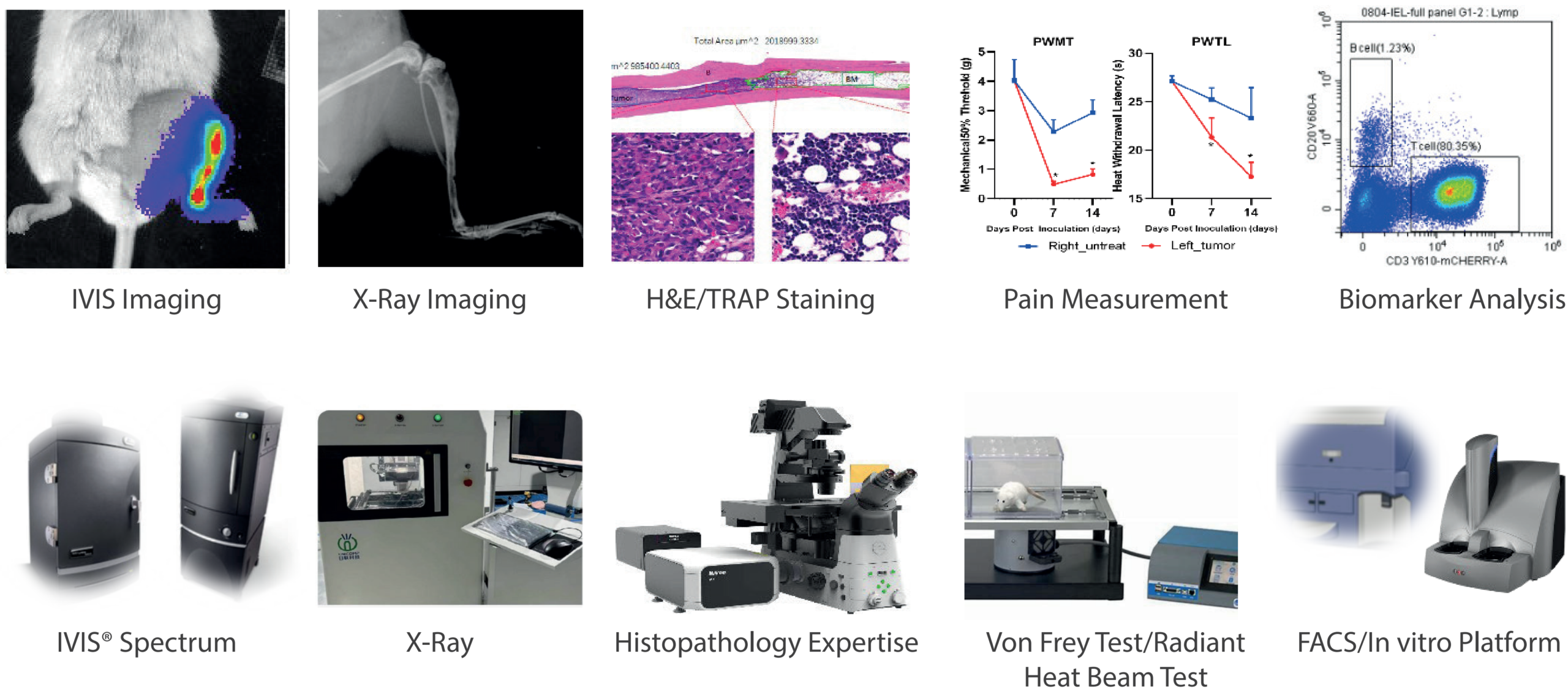
Main Readouts
Case Studies
Bone Metastasis by Intracardiac Inoculation:
Established with Human TNBC MDA-MB-231-luc Cell Line

Bone Metastasis by Intratibial Inoculation:
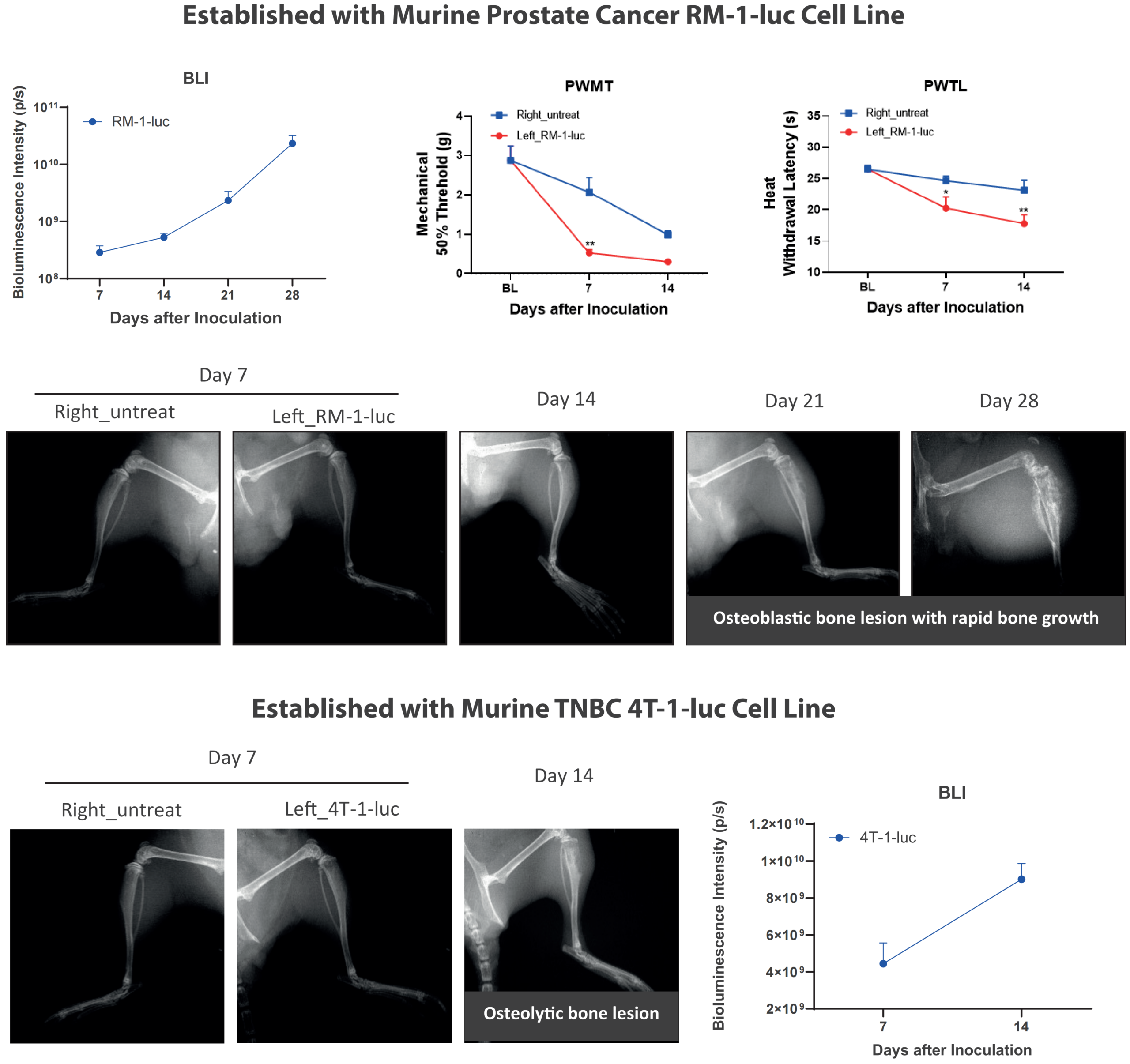
PharmaLegacy boasts extensive expertise in developing bone metastasis models, offering a thorough and comprehensive set of evaluation criteria related to bone cancer. Our expertise lies in developing experimental models that reliably achieve solid metastasis incidence rates. We provide fully validated models for bone metastasis induced by both intracardiac and intratibial injections, specifically for breast and prostate cancers. Additionally, we have established various spontaneous bone metastasis models through the continuous enhancement of our tumor-implantation surgical techniques.
Our specialized services extend to evaluating drug mechanisms of action through in vitro tumor biology and ex vivo molecular pharmacology methods, facilitating early proof-of concept assessments for drug development candidates.
To advance a compound from discovery to clinical, or to halt its development, is a huge and costly decision. For the benefit of you and your company, and for the well being of patients in need of treatment, that decision needs to be based on correct information.
There’s a lot on the line. Let PharmaLegacy get the correct answers.