
Drug Resistance Tumor Models
Facilitating novel anti-cancer drug discovery
Tumor therapeutic resistance is the leading cause of cancer treatment failure. Statistics indicate that more than 90% of cancer-related deaths are attributed to drug resistance. Whether for conventional radiotherapy and chemotherapy, molecular targeted therapy or immunotherapy, tumor cells can develop acquired resistance after prolonged drug administration in patients, which ultimately leads to treatment failure, tumor recurrence and even metastasis. In addition, some patients show intrinsic insensitivity to anti-tumor agents at the initiation of treatment, i.e., primary resistance, making the therapy ineffective from the very beginning.
At PharmaLegacy, we provide our clients about 30 well-validated drug resistance tumor models for in vivo applications.
MODELS / SERVICES
30 drug-resistant tumor models for anticancer drug discovery, supporting rapid, efficient evaluation of cytotoxicity and tumor growth inhibition of test articles.
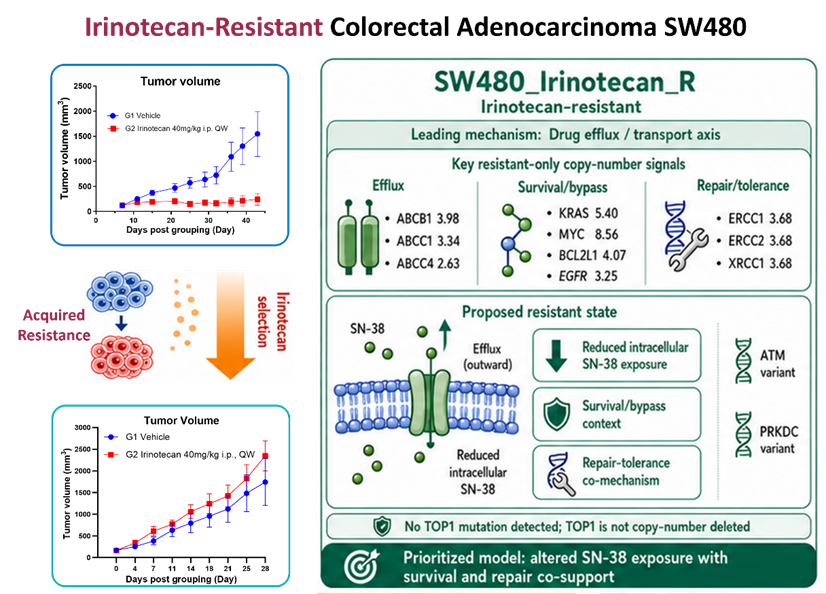
Genetic annotation via RNA‑seq and WES assays: Whole‑exome sequencing captures somatic mutations and copy number variations at the DNA level, while RNA‑seq reveals differential gene expression and transcriptomic signatures. Combined analysis supports comprehensive genetic annotation to uncover molecular drivers of tumor progression and drug resistance.
To further dissect resistance mechanisms, each drug-resistant model is furnished with comprehensive genomics, transcriptomics and proteomics datasets. With our dedicated bioinformatics platform, deep interpretation and network analysis of tumor drug resistance can be performed.
Case Study:
Drug-Resistant Tumor Models
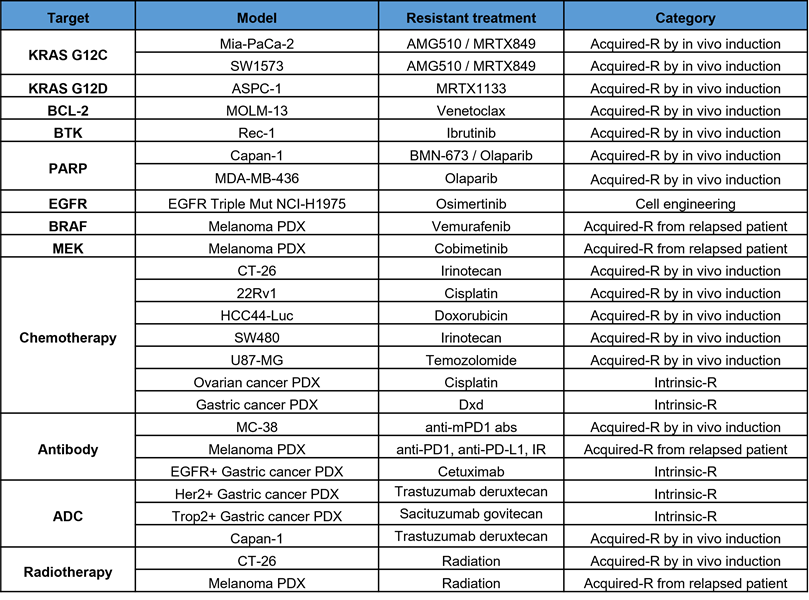
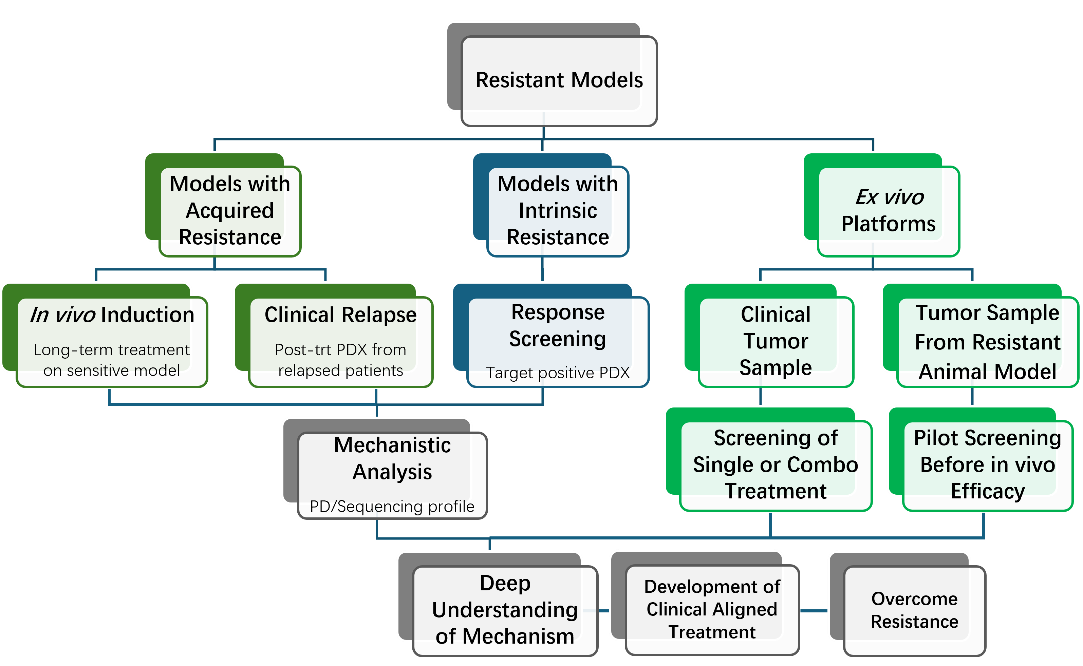
Over 30 well-characterized drug-resistant tumor models covering both acquired and primary resistance, including CDX and PDX models. Drug-resistant tumor models are available in non-humanized and humanized mice, suitable for evaluating a wide range of test articles. These models support mechanistic investigation of therapeutic resistance, in vivo efficacy assessment of candidate agents, biomarker discovery, and resistance signature profiling. All models are accompanied by multi-omics datasets (whole-exome sequencing / WES, RNA-seq, proteomics) and historical control efficacy response data.
We provide:
- No leading time before study initiation
- Consistent tumor engraftment with robust historical control data for reference
- Options and dosing regimen ranges for comparative and combination efficacy assessments.
- Frequent data updates (at least twice per week), timely communication, and feedback responses on project progress to facilitate data-driven decisions from target validation, in vivo proof-of-concept studies to IND enabling packages.
To date, Pharmalegacy’s Oncology and Immuno-Oncology platform offers more than 700 in vivo models, including CDX (300+), PDX (350+) and syngeneic models (50+) among these, 90+ are orthotopic & experimental metastasis models, 100+ are humanized (huPBMC or HSC) models and about 30 drug resistance models. We provide multiomic profiling data for each resistance model and support indepth bioinformatic analyses. This comprehensive platform significantly improves the translational efficiency of drug discovery and accelerates the path of more anti-resistance therapeutics to clinic.
Committed to quality:
- Completed over 600 FDA / CFDA IND filings
- AAALAC accredited vivarium
- 24/7 access to PharmaLegacy representatives
- 380,000 square feet of facility space
Looking for a CRO that can deliver pipeline breakthroughs? Contact PharmaLegacy.
Providing Better Data for Critical Immuno-Oncology Pipeline Decisions
PharmaLegacy works to get you the answers you need with our wide selection of carefully developed in vivo and in vitro models. In this document, you’ll see a sample of the in vitro assays we run along with a sample of real-world data from them. See why over 700 pharmaceutical companies, including many global leaders, trust PharmaLegacy for the unbiased, accurate information they need to make critical pipeline decisions.

We’re ready when you are.
Tell us your pharmacology challenges.


