
Human Patient-Derived Xenograft (PDX) Models
Facilitating novel anti-cancer drug discovery
Fresh tumor tissues obtained from surgical resection or biopsy of cancer patients are directly engrafted into immunodeficient mice without in vitro cell culture to establish the model. Compared with conventional CDX (cell line-derived xenograft) models, PDX models retain the heterogeneity, histomorphology, key molecular features, target expression and drug response profiles of the original patient tumor to a greater extent, and better recapitulate the biological characteristics of patient tumors.
At PharmaLegacy, we provide our clients with more than 350 well-validated PDX models for in vivo applications.

MODELS / SERVICES
350+ PDX models for anti-cancer drug discovery, enabling rapid and efficient evaluation of potential cytotoxicity and growth-inhibition effects of test compounds.
Genetic annotation with RNA-SEQ and WES detection
Biomarker exploration, target screening, drug sensitivity subtyping and resistance mechanism studies
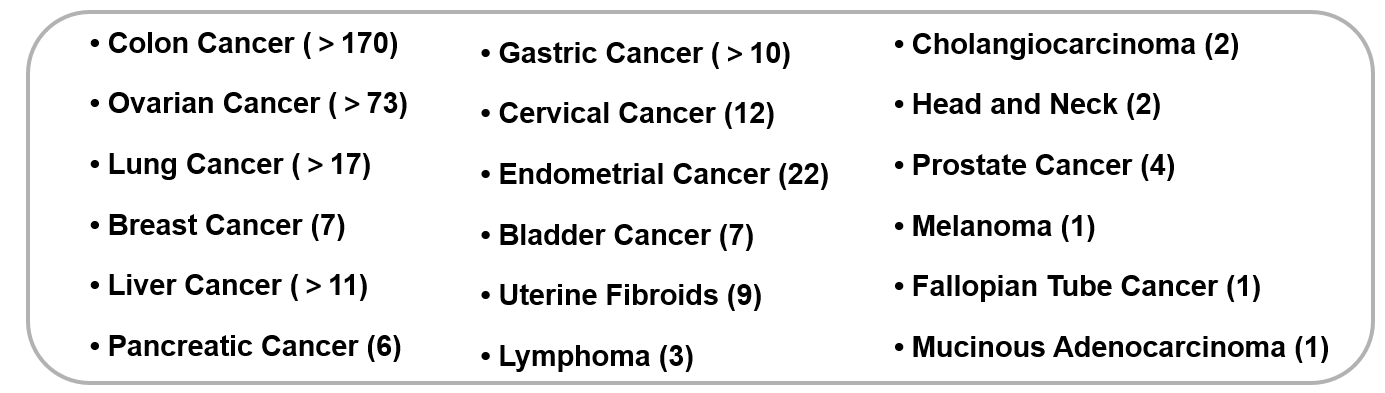
Continuously increased PDX bank (>30 new model development per month)
Multiple drug-resistance PDX model available (chemo-, anti-PD1-, ADC-resistance etc.)
PDC available to certain PDX models
Double-humanized PDX model available (PDX on hPBMC or hCD34+ mice)
PDX Chip array, High-throughput target screening platform
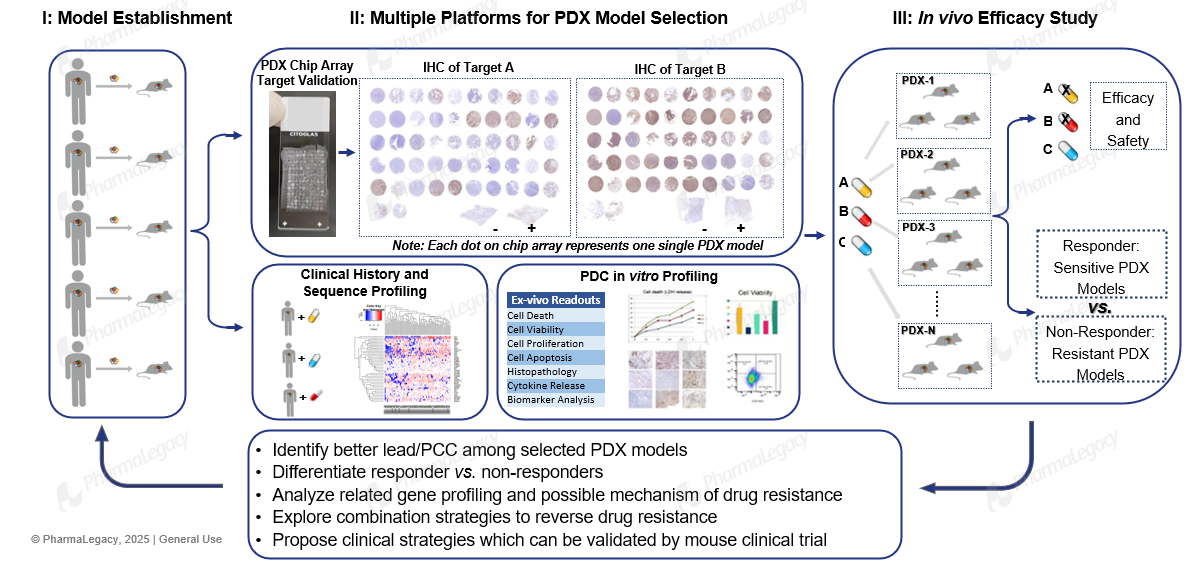
PDX chip array – provide high throughput target validation by IHC (cover >50 PDX models)
Validated target: Trop2, EGFR, HER2, CD19, Claudin 18.2 and more.
Case Study:
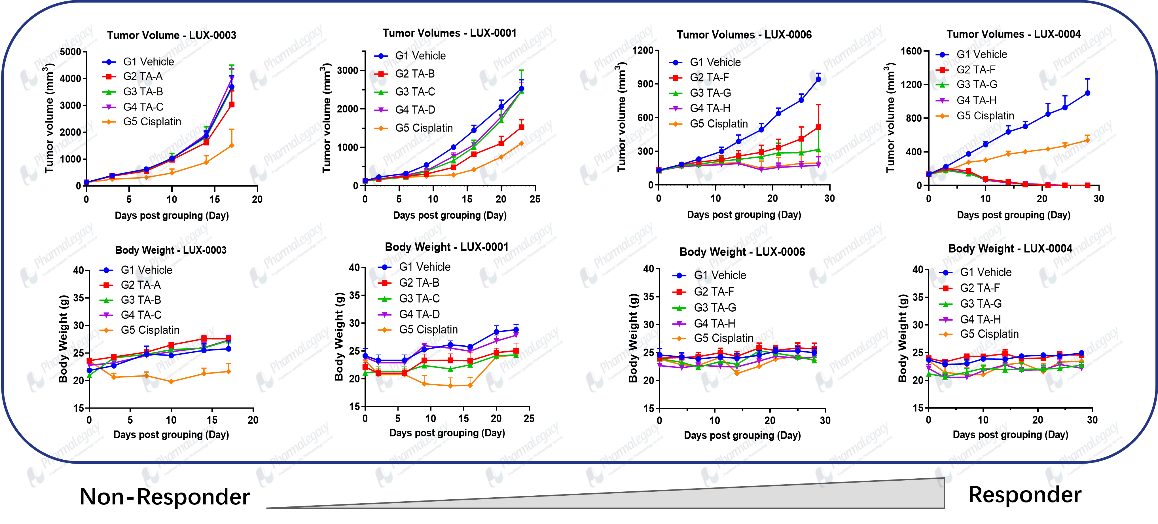
We have established over 350 PDX models covering multiple cancer types, including colorectal cancer, lung cancer, ovarian cancer, etc. We can provide conventional subcutaneous PDX models, PBMC-humanized models and CD34-humanized models for the evaluation of various test articles.
PDX models with primary or acquired resistance are used to systematically dissect resistance mechanisms and develop strategies to overcome drug resistance in a clinically relevant biological context.
We provide:
- No leading time before study initiation
- Consistent tumor engraftment with robust historical control data for reference
- Options and dosing regimen ranges for comparative and combination efficacy assessments.
- Frequent data updates (at least twice per week), timely communication, and feedback responses on project progress to facilitate data-driven decisions from target validation, in vivo proof-of-concept studies to IND enabling packages.
To date, Pharmalegacy’s Oncology and Immuno-Oncology platform offers more than 700 in vivo models, including CDX (300+), PDX (350+) and syngeneic models (50+) among these, 90+ are orthotopic & experimental metastasis models, 100+ are humanized (huPBMC or HSC) models and about 30 drug resistance models. We provide multiomic profiling data for each resistance model and support indepth bioinformatic analyses. This comprehensive platform significantly improves the translational efficiency of drug discovery and accelerates the path of more anti-resistance therapeutics to clinic.
Committed to quality:
- AAALAC accredited vivarium
- PK/PD, molecular pharmacology and preliminary toxicology adjacency studies
- 24/7 access to PharmaLegacy representatives
- Research data electronically managed by BioBook (IDBS, UK)
Want your scientific discoveries to become treatments? PharmaLegacy’s the right partner for you.
Top Pharmaceutical Companies Trust PharmaLegacy for their Oncology Trials
“The study they delivered on a very reasonable budget was top notch […] The model was executed flawlessly.”
See why a top-20 pharmaceutical company trusts PharmaLegacy for their preclinical immuno-oncology trials.

We’re ready when you are.
Tell us your pharmacology challenges.


