
NEUROPATHIC PAIN
PharmaLegacy has the expertise and models you need to advance your neuropathic pain program.
PHARMALEGACY HAS THE EXPERTISE AND MODELS YOU NEED TO ADVANCE YOUR NEUROPATHIC PAIN PROGRAM.

MODELS / SERVICES
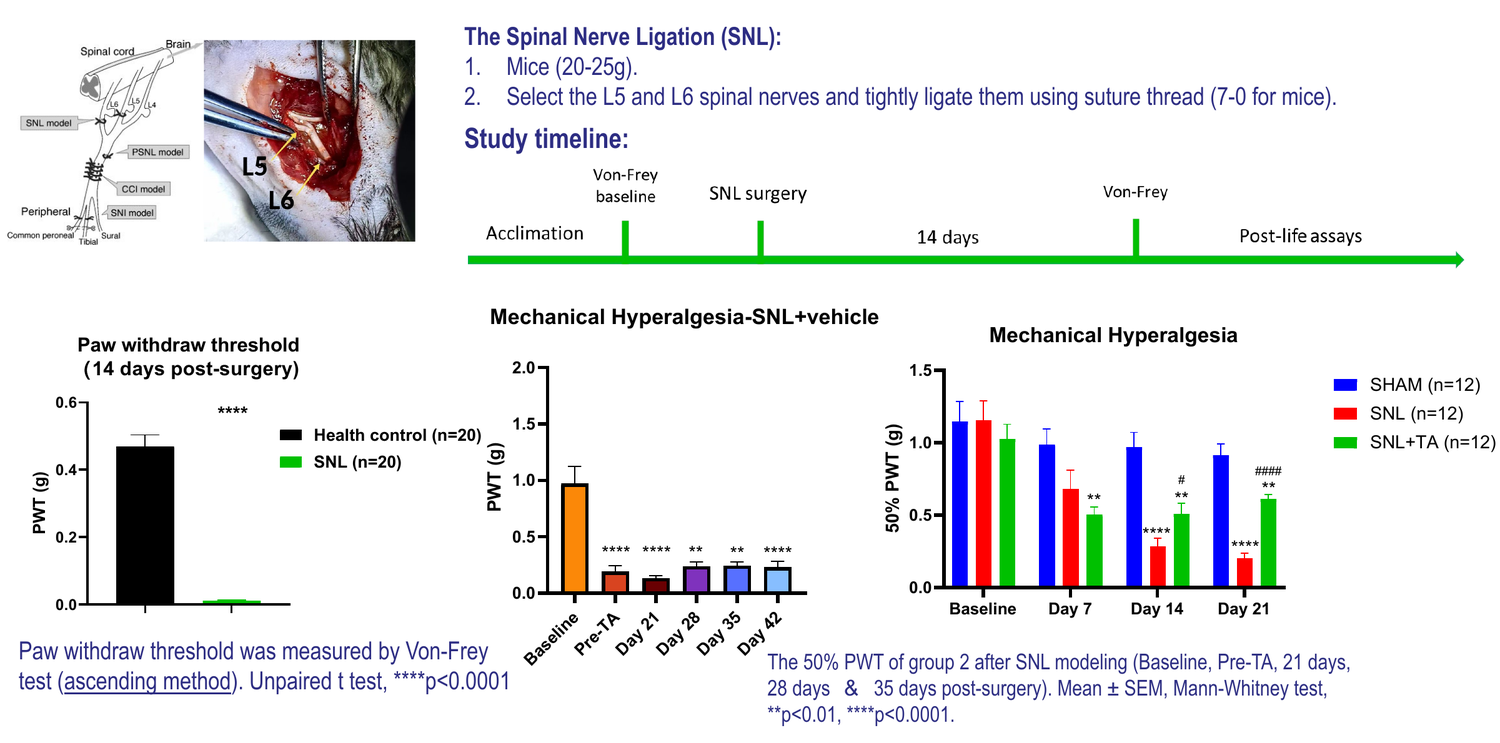
Case Study - Spinal nerve ligation (SNL) model of neuropathic pain in mouse & Endpoint Measurements
The Spinal Nerve Ligation (SNL) model is a well-established and highly reproducible model of peripheral neuropathic pain. Ligation of the L5 and/or L6 spinal nerves produces persistent mechanical hypersensitivity, sensory dysfunction, and neuroinflammatory responses that closely mimic clinical neuropathic pain conditions, including radiculopathy, peripheral nerve injury, and chronic neuropathic pain syndromes.
PharmaLegacy has established a robust SNL platform with standardized surgical procedures and longitudinal behavioral assessments. Mechanical hypersensitivity is routinely evaluated using von Frey testing, allowing quantitative measurement of paw withdrawal thresholds throughout disease progression and therapeutic intervention. The model demonstrates consistent and sustained reductions in mechanical thresholds following surgery, providing a reliable platform for efficacy assessment.
The SNL model has been successfully validated with clinically relevant analgesics and investigational therapeutics, supporting evaluation of both small molecules and biologics targeting neuropathic pain mechanisms. In addition to behavioral endpoints, the platform can be integrated with molecular, electrophysiological, and histopathological analyses to investigate target engagement, neuroinflammation, and mechanisms of action.
This model is widely applicable for preclinical development of therapies targeting neuropathic pain, peripheral nerve injury, and chronic pain disorders.
Paw Withdrawal Threshold (von Frey Test)
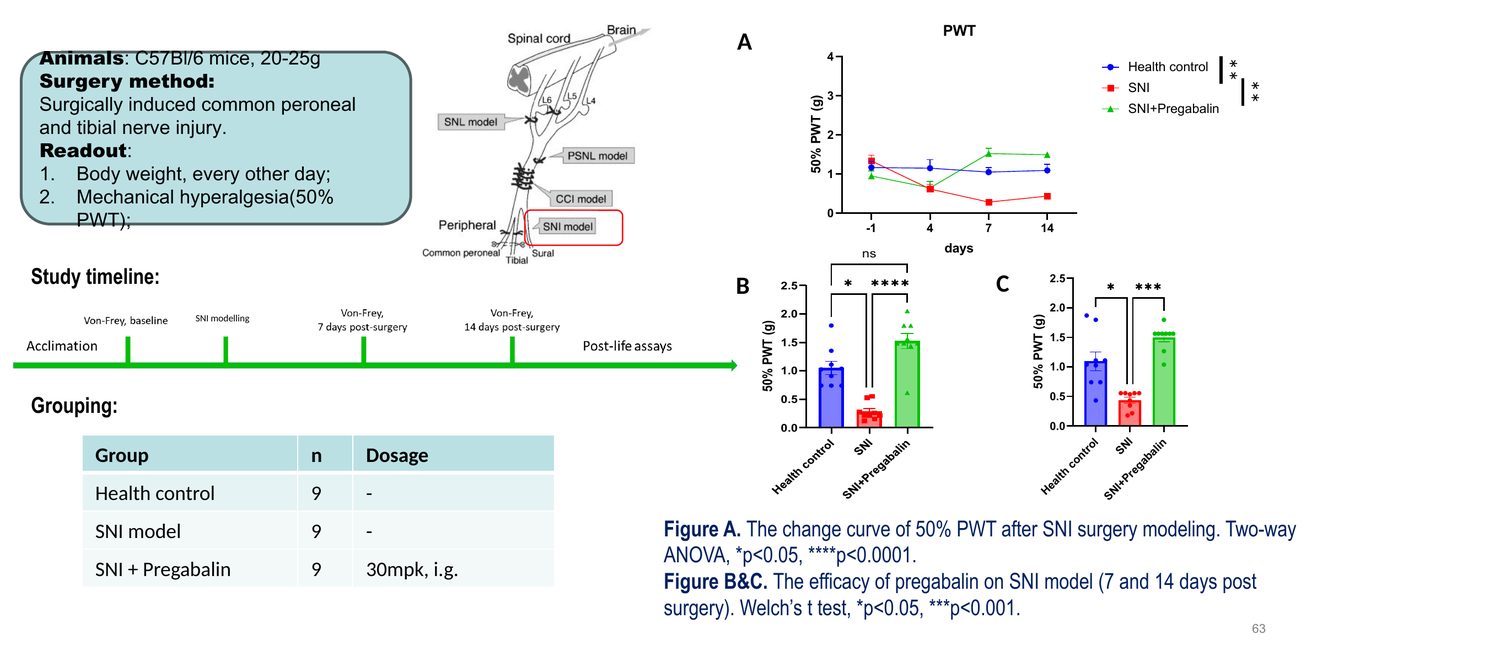
Case Study - Spare nerve injury (SNI) model of neuropathic pain in mouse & Endpoint Measurements
The Spared Nerve Injury (SNI) model is a widely used and highly reproducible model of peripheral neuropathic pain. The model is generated through selective injury of the tibial and common peroneal nerves while preserving the sural nerve, resulting in long-lasting mechanical hypersensitivity and sensory abnormalities that closely resemble clinical neuropathic pain conditions.
PharmaLegacy has established a robust SNI platform with standardized surgical procedures and validated behavioral endpoints. Mechanical allodynia is routinely assessed using von Frey testing, enabling quantitative monitoring of pain progression and therapeutic responses over time. The model consistently produces stable and persistent reductions in paw withdrawal thresholds, providing a reliable foundation for efficacy evaluation.
The predictive validity of the model has been confirmed using clinically relevant analgesics, including pregabalin, which effectively reverses SNI-induced mechanical hypersensitivity. This platform supports the evaluation of small molecules, biologics, antibodies, oligonucleotide therapeutics, and gene therapies targeting neuropathic pain pathways.
In addition to behavioral assessments, the SNI model can be integrated with histopathology, immunohistochemistry, molecular biomarker analysis, electrophysiology, and omics-based approaches to investigate disease mechanisms, target engagement, and therapeutic responses. The model is widely applicable for preclinical development programs focused on peripheral neuropathy, nerve injury, chronic pain, and neuroinflammatory disorders.
Pregabalin Efficacy
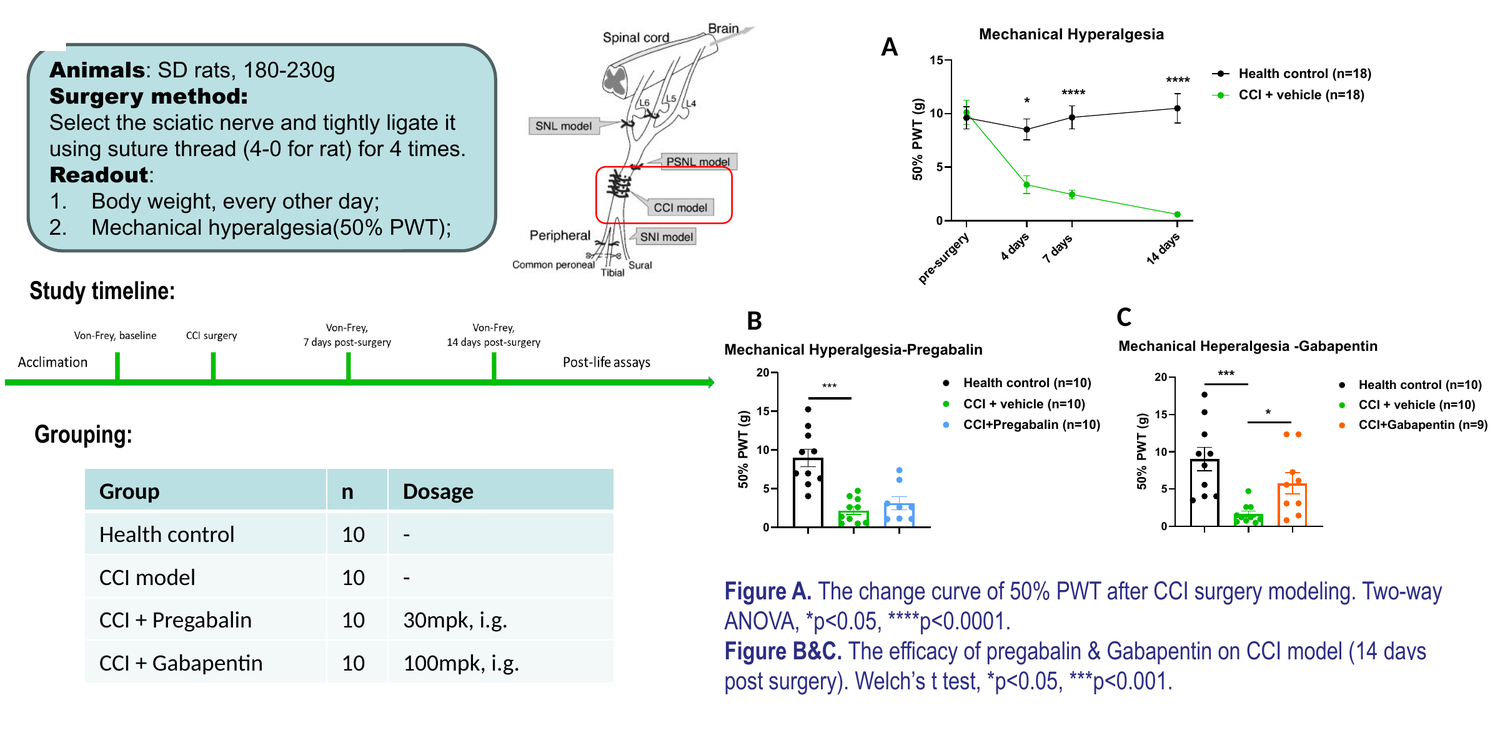
Case Study - Chronic constriction injury (CCI) model of neuropathic pain in mouse & Endpoint Measurements
The Chronic Constriction Injury (CCI) model is one of the most extensively characterized and widely used models of peripheral neuropathic pain. Partial ligation of the sciatic nerve induces persistent mechanical hypersensitivity, spontaneous pain-related behaviors, and neuroinflammatory responses that closely resemble clinical neuropathic pain conditions resulting from nerve trauma or compression.
PharmaLegacy has established a robust and reproducible CCI platform in rodents using standardized surgical procedures and validated behavioral assessments. Mechanical allodynia is routinely monitored using von Frey testing, enabling quantitative evaluation of pain development and therapeutic efficacy throughout the study period. The model consistently produces significant reductions in paw withdrawal thresholds, providing a reliable and sensitive endpoint for pharmacological studies.
The translational relevance of the model has been confirmed using clinically established neuropathic pain therapeutics, including pregabalin and gabapentin, both of which effectively reverse CCI-induced mechanical hypersensitivity. These results demonstrate the predictive validity of the platform for evaluating novel analgesics and disease-modifying therapies.
In addition to behavioral endpoints, the CCI model can be combined with histopathology, immunohistochemistry, molecular biomarker analysis, electrophysiology, and transcriptomic profiling to investigate pain mechanisms, neuroimmune interactions, and target engagement. This integrated platform supports preclinical development programs focused on neuropathic pain, peripheral nerve injury, neuroinflammation, and chronic pain disorders.
Pregabalin & Gabapentin Efficacy
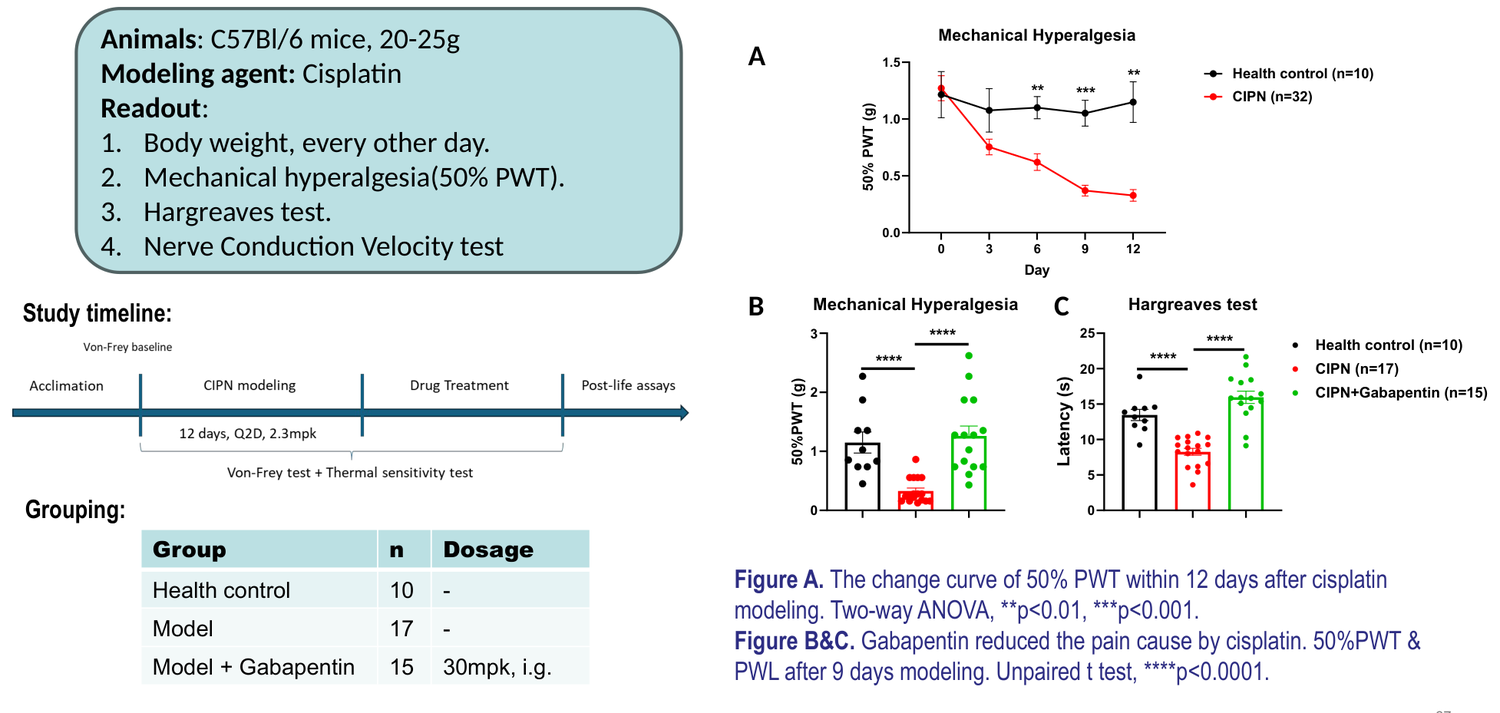
Case Study - Chemotherapy-induced peripheral neuropath (CIPN) in rodent & Endpoint Measurements
Chemotherapy-Induced Peripheral Neuropathy (CIPN) is a common and dose-limiting adverse effect associated with a variety of anticancer agents, particularly platinum compounds and taxanes. Patients frequently develop mechanical allodynia, thermal hypersensitivity, numbness, and persistent neuropathic pain, creating a significant unmet medical need in oncology supportive care.
PharmaLegacy offers multiple clinically relevant CIPN models, including cisplatin-induced and paclitaxel-induced peripheral neuropathy models. These platforms reproduce key sensory abnormalities observed in cancer patients and provide robust tools for evaluating novel therapeutics targeting chemotherapy-associated neuropathic pain.
A comprehensive range of behavioral endpoints is available, including von Frey testing for mechanical hypersensitivity, Hargreaves testing for thermal sensitivity, body weight monitoring, and disease progression assessment. These measurements enable quantitative evaluation of both neuropathy development and therapeutic efficacy.
The translational validity of the models has been confirmed using clinically established neuropathic pain therapies such as gabapentin. In addition, the platforms can be integrated with histopathology, immunohistochemistry, molecular biomarker analysis, and transcriptomic approaches to investigate disease mechanisms, target engagement, and treatment responses.
These models are well suited for preclinical development programs focused on chemotherapy-induced neuropathy, neurotoxicity assessment, peripheral nerve disorders, and chronic neuropathic pain therapeutics.
Gabapentin Efficacy (Cisplatin-Induced)
Be confident in your data:
- Our scientific staff average 15+ years of experience
- FDA Part 11 compliant
- Rigorous adherence to international GLP and QA best practices
- AAALAC accredited
- 600+ NDAs based on our data
Advance to NDA quickly and confidently. Contact PharmaLegacy today.
We’re ready when you are.
Tell us your neuropathic pain pipeline challenges.


